UNESCO
UNESCO
Herzegovina’s UNESCO heritage lives as much in hands, voices, and skills as it does in stone, bridges, and caves - making it a region where heritage is experienced, not only displayed.

The Old Bridge and Old Town of Mostar
UNESCO World Heritage Site (2005)
The Old Bridge (Stari Most) is Herzegovina’s most powerful symbol. Built in the 16th century, it was designed not as a monument but as a living connection between riverbanks, neighbourhoods, and cultures.
UNESCO recognises the bridge and historic urban core of Mostar as an exceptional example of a multicultural urban landscape, shaped by Ottoman, Mediterranean, and Central European influences. Its destruction during the war and careful reconstruction gave it additional meaning, transforming it into a global symbol of resilience and reconciliation.
Today, the bridge is still crossed, lived, and leapt from. It is not only observed but experienced.

Radmilja - Stećci medieval tombstones
UNESCO World Heritage Site (2016)
Part of the serial property “Stećci - Medieval Tombstone Graveyards”
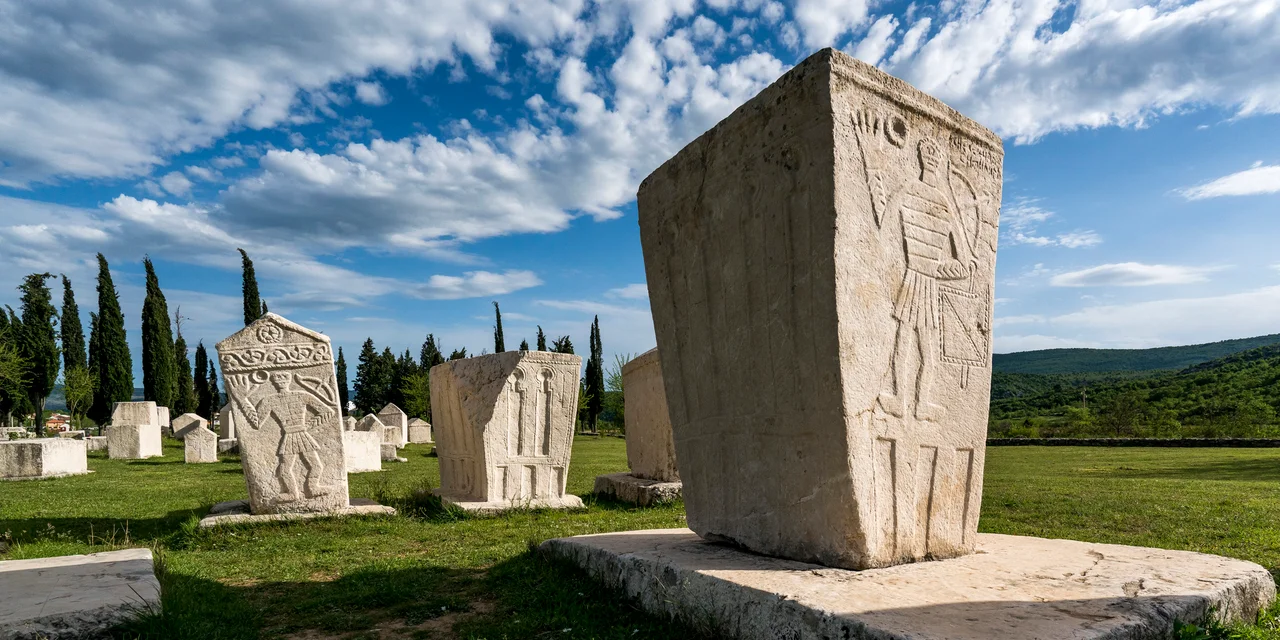
Radimlja, near Stolac, is one of the most important medieval necropolises of stećci, large stone tombstones dating from the 12th to 16th centuries.
UNESCO recognises stećci as a unique cultural phenomenon of the Western Balkans, reflecting a shared medieval world beyond modern national or religious borders. At Radimlja, the stones are exceptionally well preserved and placed in direct dialogue with the natural landscape.
Carved motifs - raised hands, riders, spirals, and plants - suggest movement, memory, and identity. The site is quiet, open, and unframed, inviting reflection rather than explanation.

Vjetrenica cave
UNESCO World Heritage Site (2024)
Vjetrenica Cave is Herzegovina’s most significant natural heritage site. Hidden beneath the karst landscape of Popovo Polje, it is one of the richest caves in Europe in terms of biodiversity, home to numerous endemic and rare subterranean species.
UNESCO inscribed Vjetrenica for its outstanding geological formations and exceptionally preserved underground ecosystem. Formed over millions of years, its chambers, lakes, and passages reveal a world shaped entirely by water and stone.
Visits are guided and deliberately slow, emphasising respect and preservation. Vjetrenica does not impress through spectacle, but through depth, silence, and time.

Konjic woodcarving
UNESCO inscription: 2017
Status: Intangible Cultural Heritage of Humanity
Region: Herzegovina / Upper Neretva
Konjic woodcarving (Konjičko drvorezbarstvo) is the most internationally recognised living craft tradition connected to Herzegovina.
This highly refined form of hand woodcarving developed in Konjic during the late 19th century and became known far beyond the region for its distinctive geometric, floral, and symbolic motifs. The craft is applied primarily to furniture - tables, cabinets, chests, but also to architectural details and household objects.
What makes it UNESCO-worthy is not only the visual style, but the way knowledge is transmitted:
- through families and workshops
- from master to apprentice
- entirely by hand, without industrial shortcuts
The motifs are not decorative trends; they are a coded visual language shaped by Ottoman, local, and Central European influences. Today, Konjic woodcarving remains a living practice—used, sold, adapted, and taught—rather than preserved behind glass.
For visitors, this heritage is encountered through people, not sites: workshops, hands at work, stories told while carving.
Grass moving competition custom (Kupres)
UNESCO inscription: 2020
Status: Intangible Cultural Heritage of Humanity
Region: Bosnia and Herzegovina (Dinaric cultural zone)
Although geographically centred in Kupres (bordering Herzegovina and Central Bosnia), this tradition belongs to the shared Dinaric rural culture.
The annual grass-mowing competition celebrates:
- traditional scythe-mowing techniques
- communal work
- respect for land and rhythm of seasons
It is not about sport, but about skill, endurance, and collective memory - values deeply familiar to Herzegovinian rural life.
Sevdalinka (Ongoing / National list → International nomination)
Status: Nationally protected; international UNESCO recognition in progress
Region: Bosnia and Herzegovina
Sevdalinka, the urban traditional song form often described as the “Balkan blues” has been officially recognised on Bosnia and Herzegovina’s national inventory of intangible cultural heritage, with international UNESCO nomination underway.
Herzegovina has its own sevdalinka variants, especially in Mostar, where the genre developed a distinctive emotional and melodic character.
Sevdalinka is:
- oral tradition
- emotional memory
- urban cultural identity
- still actively sung, interpreted, and reimagined
It is living heritage in its purest form. This makes Herzegovina rare: heritage here is not frozen, but active. You don’t just visit it. You meet it, hear it, taste it, and watch it being made.


