I was born here
Herzegovina
I was born here
The Art of Annoyance in Herzegovina: What or who is the TERS?
In Herzegovina, being a TERS is more than a personality trait—it’s a badge of honor. These individuals, known for their perpetual frowns and knack for being annoyed by almost everything, have turned grumpiness into an art form. But this isn’t just any frown; it’s a deep, soulful expression shaped by centuries of hardship. Wars, famines, and countless struggles have forged a culture where optimism feels like tempting fate. In Mostar, the TERS spirit thrives, blending resilience with a touch of humor.
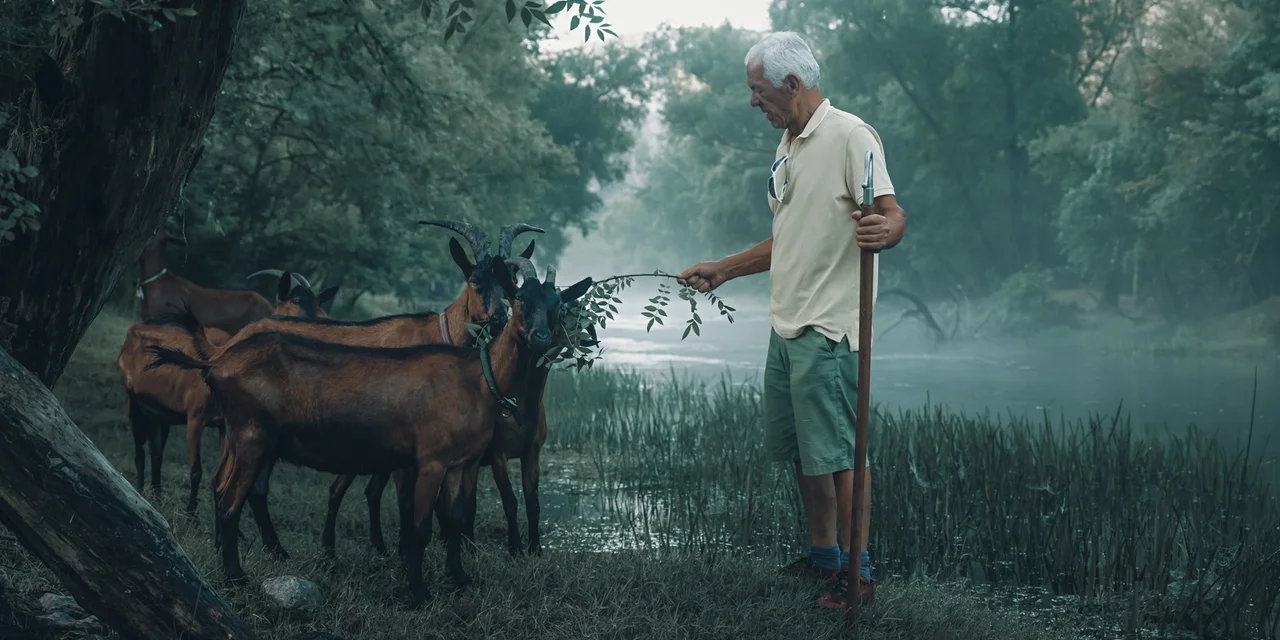
Take my grandfather, for instance—a quintessential Herzegovinian TERS. With his chiseled face, tall frame, and ever-present cane, he embodied the stoic charm many aspired to. His love for my grandmother was the only crack in his tough exterior. Their love story? Straight out of a drama. He “stole” her from a village gathering, defying traditions and even the priest.
When the priest insisted on a proper traditional wedding, my grandfather’s response was pure TERS:
“Do your job, or i'll find someone who will.”
His quirks were legendary. He oriented his house away from the main road to avoid nosy neighbors. When he could no longer tend to his vineyard perfectly, he uprooted every vine. And his “medical device”? A five-kilo stone in a sock to soothe his stomach. Even his shoes had holes for his bunions because comfort trumped appearances. TERS, through and through.
Wine, Grapes, and Family Tales
One of my earliest memories is of pressing grapes with my dad and grandfather in the basement. My tiny feet sank into the grapes, the smell overwhelming my senses. That day, I swore off grape seeds forever. My dad, a Blatina wine enthusiast, joked,
“At least it didn’t ruin your wine-drinking abilities.”
Blatina, with its deceptive sweetness (much like Herzegovinian women) and bold finish, was a family favorite, as my dad would say:
“Just like my wife, sweet in the beginning, but kicks your rear end, once it gets a hold of you.”
Wine wasn’t just a drink; it was a way of life. In Herzegovina, vineyards marked the passage of time more reliably than calendars. My dad was born in September. When asked about his birthdate, my grandmother would shrug and say:
“A few days before harvest.”
Life was tough, but wine made it sweeter.
Herzegovina Women
Herzegovinian women are firm and loud. Not because they enjoy noise, but because in this region it was learned long ago that if you speak quietly, no one hears you — and things won’t get done on their own. Herzegovinian men have, unfortunately, often died — in wars, on borders, on construction sites, in other people’s countries — trying to make things “better.” And when men disappear or are absent, women don’t get a break. They simply take over everything.
That’s why Herzegovinian women are used to raising children on their own, working on their own, holding together the house, the family, the finances, and the order. Not because they planned it that way, but because that’s how it turned out. And along the way, they also get to hear how they’re “strong women,” as if that were an ambition rather than a necessity.
In Herzegovina, the mother is in charge. Not symbolically, but operationally. She knows where the papers are, the bills, the kids, the lunch and who owes whom what. She remembers birthdays, funerals, who stopped talking to whom back in ’72 and why. And it’s no coincidence that in many households fathers call mothers “the boss.” Sometimes jokingly, sometimes completely serious. Because someone has to run the company and the company is called family.
Herzegovinian women don’t bother with small talk or fake pleasentries. And honestly — they’re not sure what it’s for. Conversations about the weather, traffic, and “oh, you know, getting by” are either skipped or brutally shortened. If you ask how they are, you’ll get a real answer - or none at all. Everything in between is considered unnecessary courtesy.
Because of this, they can seem rough to those used to having problems neatly wrapped first. Herzegovinian women don’t nod along out of politeness or pretend to be comfortable. But when they say they’re glad to see you - they mean it. When they ask how you are - they want the answer. Everything else is a waste of time.
A Herzegovinian woman can be strict because she knows life isn’t soft. She’s not overly gentle, but she’s not cold either. Love here is shown through care, work, and the sentence “have you eaten?”, not three-hour hugs.
And in the end, a Herzegovinian woman is neither a myth nor an ideal. She’s a woman used to getting things done, not complaining too much, and moving on - whatever happens.
Loud. Decisive. No small talk. No philosophy.


