The Lakes of Herzegovina
Lakes
Jablanica Lake
A man-made lake that became a landscape
Jablanica Lake was created in the mid-20th century with the construction of a hydroelectric power plant on the Neretva River. Over time, however, it ceased to be merely an infrastructural intervention and became an integral part of the Herzegovinian landscape. Stretching between Konjic and Jablanica, and framed by the steep slopes of Prenj, Čvrsnica, and Visočica, the lake feels almost natural despite its technical origins.
Its shores alternate between dramatic cliffs and quiet coves, while the water changes color and character with the seasons and water levels. In summer, the lake becomes a place for swimming, fishing, and weekend life; in winter, it takes on a quieter, more restrained presence. Here, nature and human intervention do not clash—they have learned to coexist.
For local communities, Jablanica Lake is more than an energy resource. It is a lived-in space, shaped by small settlements, weekend houses, and fishing spots along its banks. Jablanica Lake is not a spectacle—it is the Neretva extended into a slower rhythm.
Ramsko Lake
Highland silence and a circle of mountains
Ramsko Lake lies in the high plateau of Rama, surrounded by the mountains of Raduša, Ljubuša, and Vran. Although it was formed by the construction of a dam, its setting and scale have made it one of the most striking and serene lakes in Bosnia and Herzegovina. Its openness, vastness, and light give it an almost meditative quality.
The lake changes dramatically with the seasons. In summer, it is a place of rest, swimming, and quiet stays in nature; in winter, often wrapped in fog and silence, it feels like an entirely different world. A defining landmark is the Franciscan monastery on Šćit, which anchors the landscape with memory, culture, and continuity.
Ramsko Lake is deeply woven into local identity. It is a place of remembrance, loss, and persistence—formed when villages were submerged and a new landscape emerged from an older story. Here, history and nature are inseparable.
Boračko Lake
A mountain mirror beneath Prenj
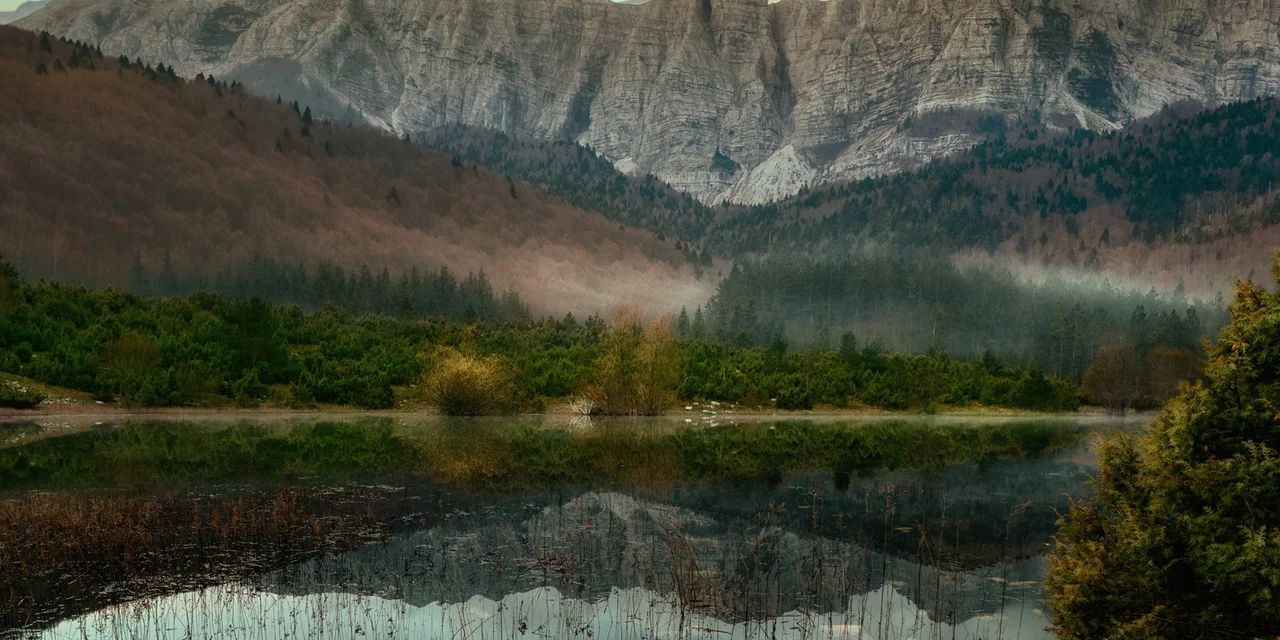
Boračko Lake lies high beneath the Prenj massif, set in a natural basin surrounded by forests and mountains. Unlike most larger lakes in Herzegovina, Boračko is of natural, glacial origin and is among the cleanest mountain lakes in the region.
Its water is cold, clear, and deep, and the surrounding landscape retains a strong sense of untouched nature. Boračko Lake has long been a destination for day trips, camping, and hiking, serving as a starting point for mountain trails. There is little urban noise here—only wind, water, and rock.
Because of its simplicity and immediacy, Boračko Lake offers a counterpoint to Herzegovina’s karst and dryness. It is a place of retreat, pause, and reconnection with the elemental.
Blidinje Lake
High-altitude stillness and the strength of open space
Blidinje Lake lies at the heart of Blidinje Nature Park, between the mountains of Čvrsnica and Vran. Situated at around 1,180 meters above sea level, it is one of the largest high-mountain lakes in Bosnia and Herzegovina—and one of the most changeable, with water levels that fluctuate significantly throughout the year.
The lake is shallow, often windswept, and austere, but it is precisely this exposure that defines its character. Surrounded by open grasslands, medieval stećak tombstones, and wide alpine horizons, Blidinje Lake feels like a place outside of time. In winter it is frequently frozen and difficult to access; in summer, it becomes a center for mountain activities and slow immersion in nature.
Blidinje is not a destination for fast tourism. It demands patience, presence, and an understanding of space. Blidinje Lake sits at the core of this experience—quiet, open, and powerful.


