The Mountains of Herzegovina
The Mountains of Herzegovina
Prenj
A wild mountain of stone and height
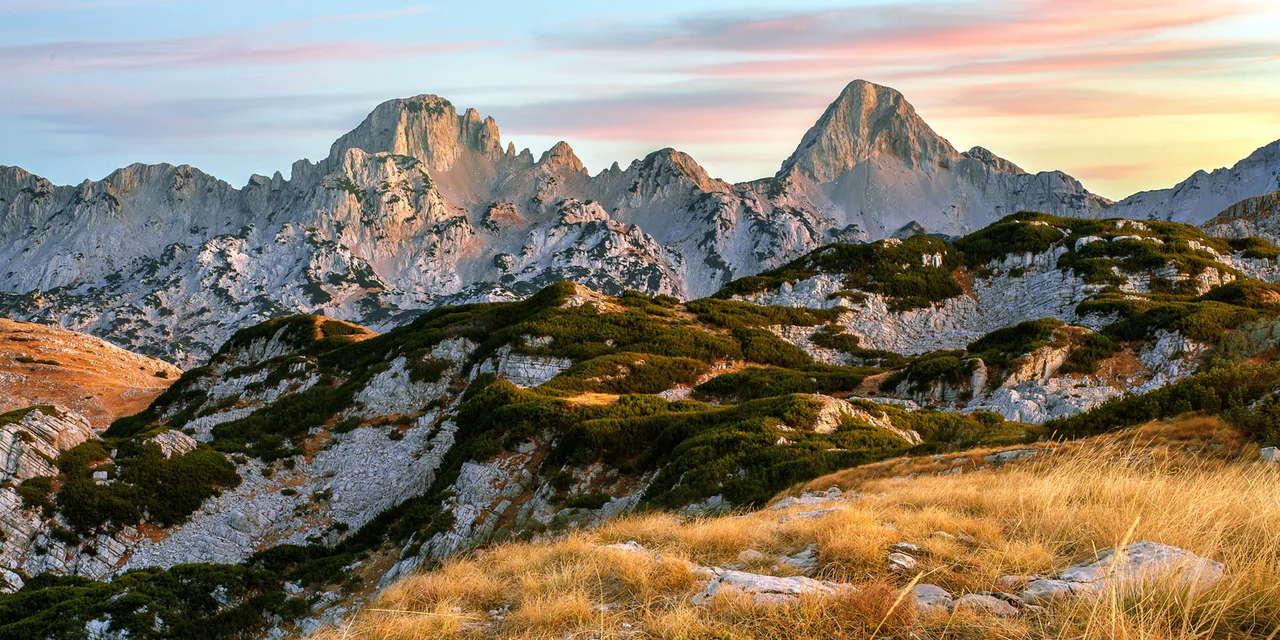
Prenj is the most rugged and iconic mountain of Herzegovina. Rising between the valleys of the Neretva and Neretvica rivers, this massif of sharp ridges, deep valleys, and limestone towers is often referred to as the “Herzegovinian Himalayas.” Prenj is not a mountain for casual walkers—it demands experience, respect, and time.
Its peaks, most notably Zelena Glava and Lupoglav, offer some of the most striking views in Bosnia and Herzegovina. Hiking routes lead through high karst valleys, grassy plateaus, and austere rock faces where nature feels almost untouched. Prenj is home to endemic plant species and rich alpine life, but above all, it is a mountain that does not yield easily to people.
For those who truly get to know it, Prenj becomes more than a destination—it is an experience of limits, silence, and the raw power of landscape.
Čvrsnica
A mountain of contrasts and an icon of Herzegovinian mountaineering
Čvrsnica is one of the most diverse and recognizable mountains in Herzegovina. Located within Blidinje Nature Park, it combines high peaks, wide plateaus, and deep canyons. Best known for Hajdučka Vrata—a monumental natural stone arch—Čvrsnica has become a symbol of mountaineering in Herzegovina.
The mountain offers a wide range of activities, from gentle hiking routes and open plateaus to demanding ascents and winter tours. From its heights, sweeping views open toward Blidinje Lake, Rama, and the Neretva Valley.
Čvrsnica is a mountain of meeting points—between wildness and accessibility, tradition and modern outdoor tourism.
Blidinje (Čvrsnica – Vran)
A highland plateau of slow rhythm
Blidinje is not just a mountain—it is a landscape. Set between Čvrsnica and Vran, this high-mountain area encompasses Blidinje Lake, broad pastures, medieval stećak tombstones, and scattered villages across an open plateau. Blidinje Nature Park is one of the rare places in Herzegovina where the mountain experience unfolds horizontally, in wide open space.
In winter, Blidinje is covered in snow and silence; in summer, it becomes a place for hiking, cycling, and extended stays in nature. People do not come here for spectacle, but for a sense of space, clean air, and simplicity.
Blidinje is where the Herzegovinian mountain reveals its calmest and most expansive face.
Velež
The mountain above the city
Velež rises directly above Mostar and is one of the most striking mountain silhouettes near the city. Its presence defines the skyline while remaining constantly within reach. Unlike Prenj or Čvrsnica, Velež is a mountain of everyday life—a place for short escapes, viewpoints, and accessible hikes.
Trails lead toward peaks such as Botin and Jaram, offering views over Mostar, the Neretva Valley, and the Herzegovinian karst. Velež lacks developed tourist infrastructure, but this rawness is precisely what gives it authenticity.
It is a mountain defined not by height, but by proximity—a quiet companion to the city below.
Raduša
A quiet mountain of plateaus and forests
Raduša stretches above the Rama Valley and Ramsko Lake. Less dramatic than Prenj, yet equally powerful in its calm, it is characterized by dense forests, gentle plateaus, and wide views that invite slow movement and longer stays.
There is no mass tourism here. Raduša attracts those seeking silence, simple hiking routes, and a close connection with the landscape. Its proximity to Ramsko Lake naturally links water and mountain into a single experience.
Raduša is a mountain that does not demand attention—it reveals itself gradually.
Cincar
A landscape of wind and open sky
Cincar is a mountain of wide plateaus and strong winds, located on the transition between Herzegovina and the Livno Plain. Often perceived as a peripheral Herzegovinian mountain, Cincar remains an important natural and landscape space.Its open pastures, free-roaming horse herds, and views toward Livno and the Dinara range give it an almost steppe-like character. Tourist infrastructure is minimal, which preserves a strong sense of freedom and vastness.
Cincar is not a mountain of attractions—it is a mountain of horizons.


