TransDinarica Cycle Route
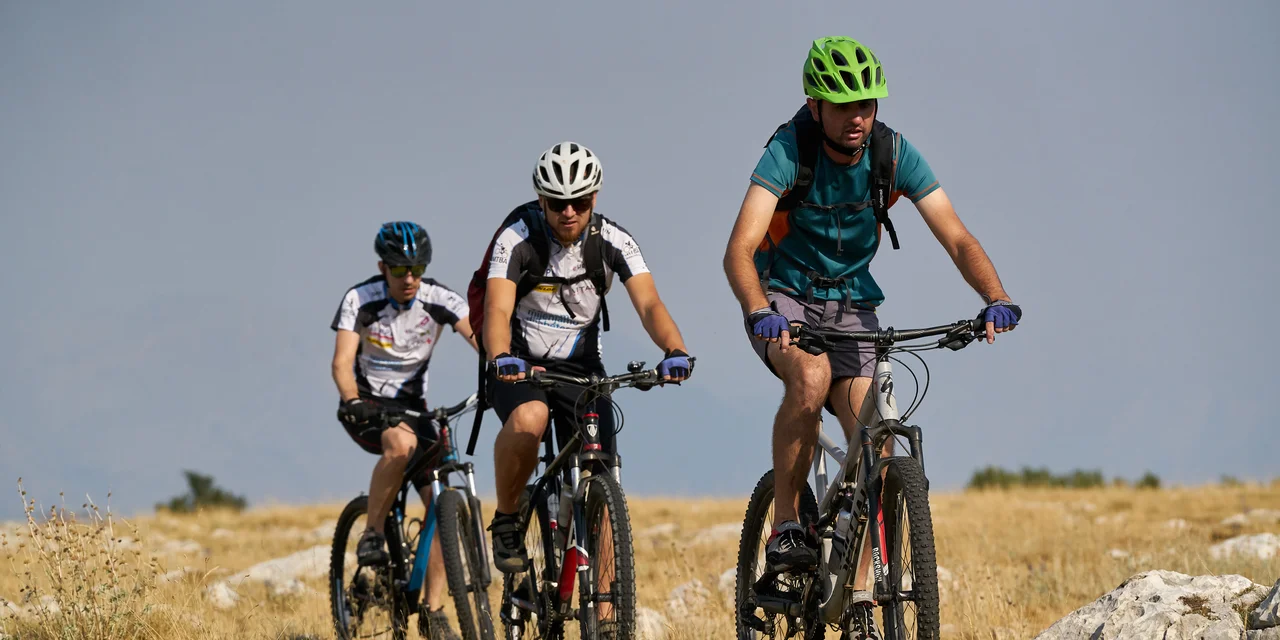
TransDinarica Cycle Route
Herzegovina - the heart of the new Trans Dinarica Cycle Route
In July 2024, a new cycling route through eight countries was launched: it starts in Slovenia, continues through Croatia to Bosnia and Herzegovina, then to Montenegro, Albania, North Macedonia, Kosovo and Serbia, and then turns back to Bosnia and Herzegovina, where Sarajevo is a kind of logistic hub for travelers on bicycles.
The cycling route was designed to take cyclists through places less known to tourists, to natural parks, wild nature and places with protected UNESCO cultural heritage. It is designed to be ridable with almost any bike (ideally a touring, gravel or mountain bike that is not afraid of macadam), and the cyclist will face approximately 50 kilometers, and 1,000 meters of altitude gain per day on the rugged terrain of the Balkans. In each country, there is a recommended, 'main' route, and then there are secondary or alternative routes, varying in terms of difficulty or attractions along the way.
The route enters Bosnia and Herzegovina from the west from Croatia at Livno, where after crossing the border, cyclists descend from the ridge of Mount Dinara to Livanjsko polje (Livno Field). From Livno, where they will certainly try the famous cheese, prosciutto and other delicacies, the route turns south, past Lake Buško Blato to Tomislavgrad. There the route splits into two parts; the southern part turns towards the Blidinje Nature Park with the lake of the same name, the highest natural lake in the country. The Tomislavgrad – Mostar stage is 78 kilometers long and requires 910 meters of climbing in total, and due to the mostly macadam section from Lake Blidinje to Mostar, it is one of the more demanding, but also one of the most picturesque stages on the entire Trans Dinarica. That is why many cyclists take more time for Mostar; they need a rest and want to see this beautiful and historically very important city. The main star is of course the Old Bridge, which rises 20 meters above the Neretva. But Mostar, at least outside the hot summer, is also becoming a popular starting point for cycling trips, for climbing via ferratas, or for exploring smaller tributaries of the Neretva River. The Trans Dinarica cycling route then leads from Mostar back into the mountains, this time along the edge of Prenj Mountain, past the Rujište ski resort and the famous medieval tombstones ‘stećci’, to the stage finish at Boračko Lake. The Trans Dinarica route continues eastward, past the Visočica, Bjelašnica and Treskavica mountains to Kalinovik and finally the Drina River Canyon, where it then enters Montenegro.
The development of the route by the GoodTrail organization from Slovenia took several years, two of which were field work to check roads, collect GPS tracks and other important information. During this time, a half-hour documentary film, Sharing the Dream, was also filmed, which was watched by more than 5,000 people in the first week after its online premiere.
Cyclists can set off on the route in several ways: completely independently with the help of freely available descriptions and maps on the website www.transdinarica.com or by purchasing extensive navigation packages, which in addition to the GPS tracks also contain other important information about the route (surface, various warnings, water points along the way, shops, accommodations, restaurants, etc.). The third, most comfortable (but also the most expensive) option are guided tours organized by local tourist providers, the so-called official Trans Dinarica Tour Operators.
In the first eight months, over 1,800 navigation packages were downloaded from the website, and given that cyclists mostly set off in company, it is estimated that over 6,000 cyclists have already been on the route: most from Germany, the USA, Great Britain, Switzerland, Australia, Austria, Belgium, the Netherlands, Canada, France, Italy and Slovenia. But you don't need to be afraid by the total length of 5,500 kilometers, as the route is designed so that you can set off on the route several times, at lengths that suit your rhythm. On the other hand, many cyclists also choose the Trans Dinarica as part of their longer route, for example across Europe or even around the world. The effect of the new cycling route, the first to connect eight Western Balkan countries, is twofold: it takes cyclists through lesser-known places with beautiful nature and culture, while also leaving an economic impact in less developed areas. It allows people to host bike travelers in their accommodations and serve them something delicious from their home garden and kitchen.


